
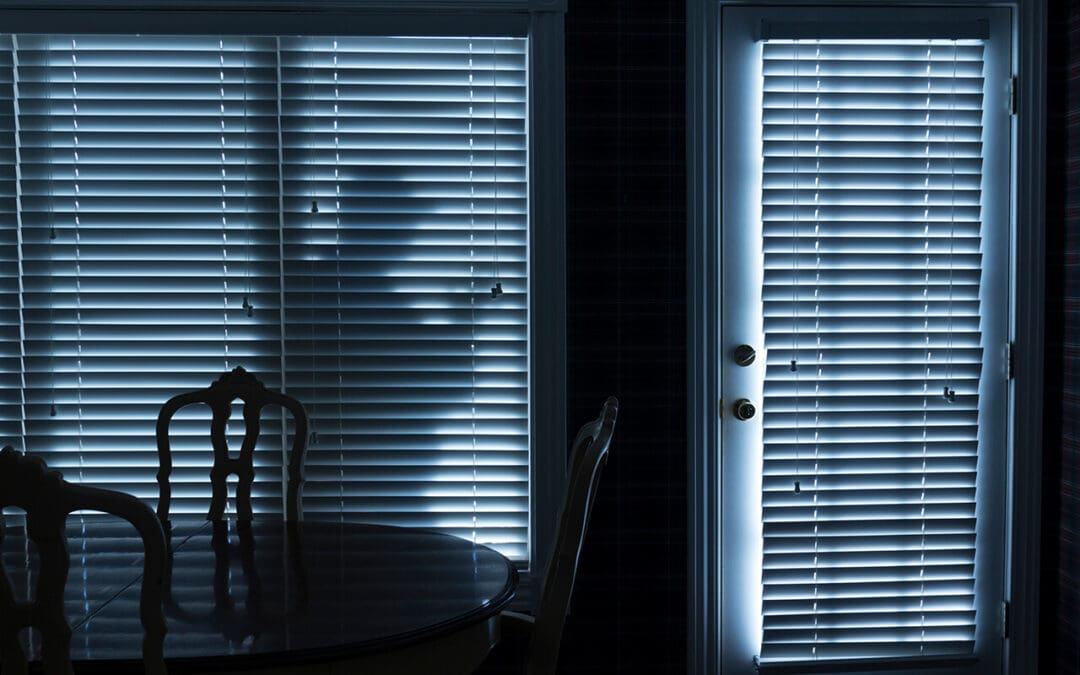
The vast majority of home burglaries are committed by opportunists looking for easy targets that offer low resistance and low visibility. The measures that most effectively improve home security don’t need to be elaborate or expensive; they need to make a property visibly less appealing than the next one. Visible deterrents, reinforced entry points, adequate lighting, and connected technology work together to create a home that communicates clearly to anyone evaluating it that the effort required for entry isn’t worth the risk.
Entry Points: The First Place to Improve Home Security
The majority of forced entries occur at the front door, back door, or an accessible window, and the physical strength of those barriers determines how much time and noise a break-in attempt requires. A deadbolt with a one-inch throw, a reinforced strike plate secured with three-inch screws that reach the door frame’s structural framing, and a door frame reinforcement kit on any exterior door that shows weakness at the jamb are the upgrades that most directly raise the effort required for forced entry. Sliding glass doors and accessible windows are the vulnerabilities most consistently overlooked. A sliding door can be lifted off its track without engaging the latch, a security bar in the track prevents this regardless of latch condition. Window locks in good working order, window security film that holds broken glass in place, and sensors that trigger an alarm when a window is opened are the improvement measures that address the second most common residential entry point.
Lighting and Visibility Investments With the Broadest Return
Lighting is the security improvement measure that simultaneously deters and detects, because opportunistic intruders rely on darkness and concealment, and a well-lit property eliminates both. Motion-activated lighting at all exterior entry points, in the side yards, and at the garage eliminates the dark zones that make a property attractive for approach and evaluation. A property that illuminates in response to movement communicates that it’s monitored and that any approach will be visible. Landscaping is the detail most homeowners don’t associate with security at all, but tall hedges and dense shrubs near entry points provide the concealment that makes a forced entry attempt less visible from the street. Trimming foundation plantings to a height that eliminates concealment at windows and doors is the landscaping adjustment that most directly removes the cover that makes entry points vulnerable.
How Smart Devices Improve Home Security
Smart home security technology has made security investment more accessible than at any previous point. A video doorbell that records and alerts when motion is detected at the front entry is the technology addition most consistently identified by law enforcement as an effective deterrent; the visible camera communicates that approach is being recorded, which most opportunistic intruders are unwilling to risk. Smart locks that allow keyless entry, remote locking, and access logs replace the physical key vulnerability that lost or copied keys represent. A connected alarm system, professionally monitored or self-monitored through an app, converts a passive deterrent into an active alert system that notifies the homeowner and emergency services when a sensor is triggered.
Frequently Asked Questions (FAQs)
What is the most effective single step to improve home security?
Reinforcing the entry door with a deadbolt with a one-inch throw, strike plate with three-inch screws, and door frame reinforcement is the single most effective step because the front door is the most common forced entry point. A door that resists forced entry for more than a few minutes is one most opportunistic intruders will abandon in favor of an easier target.
Does a home security system actually deter break-ins?
Yes, research consistently shows that visible security systems reduce the likelihood of being targeted. Signage, visible cameras, and the devices themselves are deterrence signals that most influence an opportunistic intruder’s evaluation. The deterrence effect is strongest when security indicators are visible from the approach; a camera visible from the street is more effective than one only seen when someone is already at the door.
How does outdoor lighting improve home security?
Lighting eliminates the darkness that opportunistic intrusion relies on for concealment. Motion-activated lights at entry points, side yards, and the garage trigger when movement is detected, illuminating anyone approaching and signaling that the property responds to activity. The security lighting principle is to eliminate dark zones rather than simply illuminate the entry; a bright front porch surrounded by dark side yards still provides concealment from an unlit direction.
What are the most overlooked ways to improve home security?
Sliding door security bars, window security film, trimmed foundation plantings, and locking the interior garage-to-home door even when the garage door is closed are the home security measures most consistently overlooked. Garage doors are the entry point most commonly left unsecured. The interior door from the garage to the home is functionally an exterior vulnerability that most homeowners treat as interior.
How much does it cost to improve home security meaningfully?
The most impactful measures are disproportionately affordable. A deadbolt and strike plate upgrade costs under $100. A video doorbell costs $100 to $200. Motion-activated exterior lighting runs $30 to $80 per fixture. A door frame reinforcement kit costs $50 to $100. The home security investments that produce the most deterrence are achievable for a few hundred dollars total.
The Property Inspection Pros provides home inspection services in the San Diego area. Contact us to schedule an inspection today!
Recent Comments