
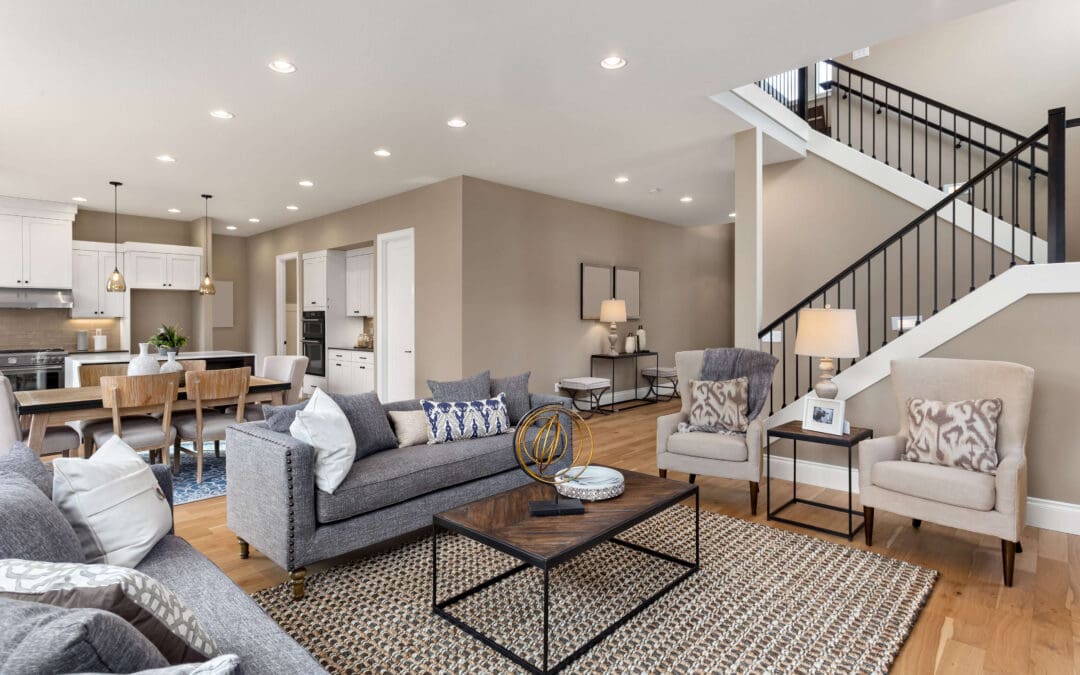
Interior design is often treated as a luxury when in reality the principles that make a space feel considered, cohesive, and comfortable are available to any homeowner willing to apply them. The difference between a room that feels pulled together and one that feels like a collection of unrelated purchases rarely comes down to how much was spent. It comes down to whether the decisions were made with an understanding of scale, proportion, light, color, and how the elements of a room relate to each other. These interior design principles are learnable, repeatable, and applicable to any room at any budget.
Scale and Proportion: The Interior Design Fundamentals Most Homeowners Skip
Scale is the interior design principle that most frequently produces the disconnect between a room that looks like a furniture showroom and one that feels like a home. A sofa too small for the room makes everything around it look provisional. A rug that doesn’t extend beneath the furniture grouping it’s meant to anchor makes the seating area float above the floor. A light fixture the wrong size for the ceiling height either disappears or overwhelms the space it’s meant to define. The practical rule for getting scale right is to measure before purchasing, the floor plan, wall dimensions, ceiling height, and furniture already in the room, and compare those measurements against what’s being considered. A rug in a living room should be large enough that the front legs of every piece of furniture in the seating area rest on it. A dining table pendant should hang 30 to 36 inches above the table surface, higher or lower disrupts the visual relationship between the fixture and the surface it’s serving.
Color and Cohesion in Interior Design
Color is the interior design element with the most immediate emotional impact. Most homeowners approach room by room rather than as a whole-home consideration. The result is a home where each room has been independently decorated without reference to adjacent rooms, producing jarring color transitions most visible when moving through the home. A cohesive approach to color starts with a whole-home palette, a family of colors that appear in varying proportions across different rooms while maintaining a visual thread that connects them. This doesn’t mean every room is the same color. It means the undertones are consistent: warm whites, warm neutrals, and warm accent colors throughout, or cool ones, without mixing the two. The transition between rooms feels natural when the palette is related. Trim color is the interior design detail most homeowners overlook. A bright, clean white on trim makes any wall color look more intentional and more current than the same wall color against dingy or yellowed trim.
The Importance of Lighting
Light is the element that affects every other decision. The interior design principle of layered lighting, combining ambient, task, and accent sources at different heights, produces the depth and warmth that a single overhead fixture never can. A ceiling light establishes general illumination. Table and floor lamps define zones and make rooms feel inviting rather than uniformly lit. Accent lighting adds the visual interest that makes a room feel designed rather than simply furnished. Dimmer switches are an upgrade most homeowners underestimate. The ability to adjust light levels for different times of day changes the emotional quality of a space without changing a single piece of furniture. A living room at full brightness reads as functional; the same room at 40 percent reads as welcoming.
Frequently Asked Questions (FAQs)
Where should I start when I want to improve the interior design of my home?
Start with the room you spend the most time in or the one that bothers you most. Identify what specifically isn’t working. Understanding what’s wrong before adding anything new prevents the pattern of layering purchases rather than addressing the underlying issue.
Do I need to hire an interior designer or can I apply these principles myself?
Most interior design principles are learnable and self-applicable. The value a professional adds most is in complex situations: open-plan spaces where room definition requires skill, whole-home renovations where decisions need to be sequenced, or when architectural changes are involved alongside furnishing decisions.
How do I choose the right paint color for a room?
Test before committing: paint samples directly on the wall, observed in both natural and artificial light at different times of day, is the only reliable method. Color reads differently in every room based on orientation, natural light exposure, and the other colors already in the space. Most interior design professionals recommend testing at least three options in large swatches before committing to a full room application.
How important is the rug size in interior design?
Rug size is one of the most consistently impactful interior design decisions. In a living room, the most common mistake is choosing a rug too small, one that sits only under the coffee table rather than beneath the furniture grouping it anchors. The correct size has the front legs of every major seating piece resting on it. When in doubt, go larger; a rug slightly too large reads as generous and intentional; one too small reads as an afterthought.
What is the most common interior design mistake homeowners make?
Buying furniture before establishing a floor plan. When purchases are made without a measured plan, the room fills with pieces that individually seem appropriate but collectively don’t work. Interior design that works starts with the floor plan: room dimensions, door and window locations, and a scaled furniture arrangement before any purchase is made. This single habit prevents the most expensive and most common interior design errors homeowners encounter.
The Property Inspection Pros provides home inspection services in the San Diego area. Contact us to schedule an inspection today!